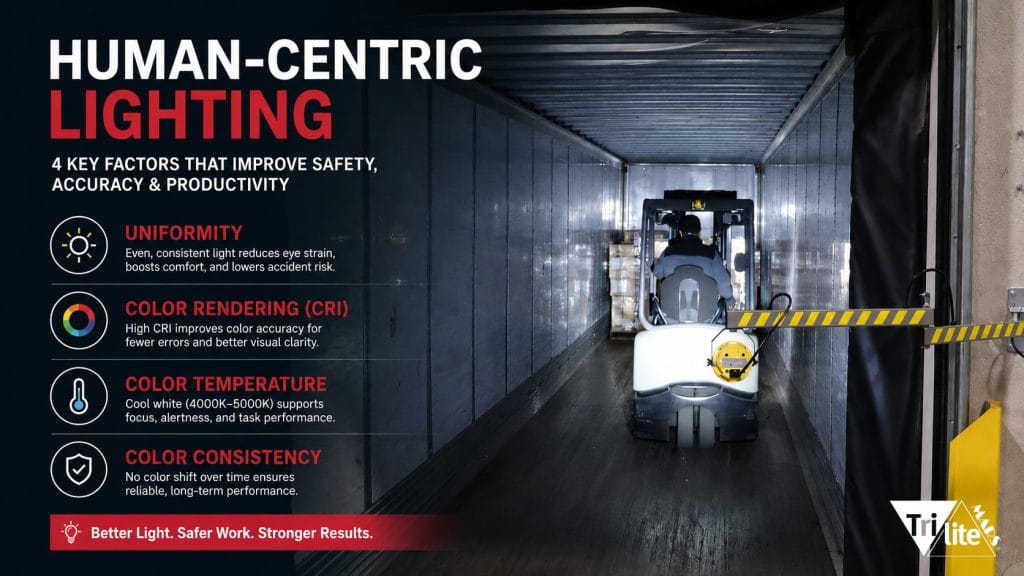
How uniformity, CRI, color temperature, and color stability shape safety, accuracy, and productivity in warehouse and loading dock environments
Human-centric lighting is a lighting design approach that aligns brightness, color accuracy, and color temperature with how the human eye and brain actually process light, instead of lighting a space purely to meet a minimum code requirement. Loading dock lighting is the specific application of those principles to docks, trailers, and staging areas, where workers move between brightly lit yards and dim, enclosed trailer interiors dozens of times per shift. Get either one wrong and the result is the same: more eye strain, more picking errors, and more injuries. This guide breaks down the four measurable factors that separate human-centric lighting from a generic high-bay retrofit, and what to look for when specifying lighting for your facility.
What Is Human-Centric Lighting?
Human-centric lighting (sometimes called human-centric design, or HCL) is a lighting strategy that treats light as a biological input, not just a visual one. Beyond letting people see, the right light supports circadian rhythm, visual comfort, alertness, and color perception. In office and healthcare design, this often means tunable color temperature that shifts throughout the day to mimic natural daylight. In industrial settings, the priorities shift slightly: instead of circadian tuning, the focus is on consistent, glare-controlled, color-accurate light that holds steady across an entire shift and across the full life of the fixture.
In a warehouse, distribution center, or loading dock, human-centric lighting typically considers four measurable variables: light uniformity (how evenly light is distributed), Color Rendering Index or CRI (how accurately colors appear), color temperature (measured in Kelvin, it determines whether light reads as warm or cool), and color consistency over time (whether the fixture maintains its specified color output as it ages). Each one has a direct, documented effect on safety and productivity, which is why lighting specifiers increasingly treat them as design requirements rather than afterthoughts.
What Is Loading Dock Lighting?
Loading dock lighting refers to the fixtures and lighting design used to illuminate dock doors, staging areas, and the interiors of trailers and shipping containers during loading and unloading. It is one of the most demanding lighting applications in a facility for three reasons. First, dock workers move repeatedly between high-light yard areas and dark, enclosed trailers, sometimes up to 60 times per shift, which forces the eye to constantly readjust. Second, trailer interiors are long, narrow, and reflective only at the front, so light has to travel 40-plus feet without losing uniformity or spilling onto walls and ceilings as wasted light. Third, dock environments combine moving forklifts, pallets, uneven floors, and tight clearances, which means inconsistent lighting does not just slow workers down, it creates a direct safety hazard.
Because of these constraints, dock lighting is usually specified separately from general warehouse high-bay lighting, with fixtures chosen specifically for beam control, throw distance, and glare management rather than raw lumen output alone.
Why Human-Centric and Loading Dock Lighting Matter
In a fast-paced warehouse or distribution center, lighting does more than illuminate, it directly shapes safety outcomes, error rates, and how employees feel at the end of a shift. The Bureau of Labor Statistics and OSHA both treat inadequate illumination as a recognized contributor to struck-by, slip, and trip incidents in warehousing, and the National Safety Council has long flagged lighting as a controllable variable in industrial injury prevention. Poor lighting can lead to eye strain, misreads, mis-picks, and workplace injuries, while properly specified lighting improves focus, reduces errors, and supports consistent performance across a shift.
The financial stakes are real on the compliance side, too. OSHA citations related to inadequate illumination fall under general industry and construction lighting standards, and penalties for serious violations can run into the tens of thousands of dollars per citation, with repeat violations costing substantially more. That makes lighting one of the rare facility upgrades that pays back through risk reduction, not just energy savings.
This guide breaks down four key lighting factors that influence real-world warehouse and loading dock operations: uniformity (Max/Min ratio), Color Rendering Index (CRI), color temperature, and color consistency (color shift). Each section below explains what the metric means, why it matters operationally, and what range to look for when evaluating fixtures.
Quick-Reference: Recommended Lighting Specifications
Before diving into each factor individually, here is a summary table of the benchmarks referenced throughout this guide. These are useful as a starting checklist when comparing fixtures or writing a lighting spec.
| Factor | Recommended Benchmark |
| Minimum illumination (OSHA 1926.56) | 3-5 footcandles (general warehouse / material handling areas) |
| Recommended illumination (IES) | 10-30 footcandles for active warehouse tasks (IES RP-7) |
| Light uniformity (Max/Min ratio) | 3:1 or lower |
| Color Rendering Index (CRI) | 75+ CRI for general warehouse and dock use |
| Color temperature | 4000K-5000K for task-intensive industrial space |
| Color stability over fixture life | No visible shift from rated CCT across the rated lifespan |
Benchmarks reflect commonly cited OSHA minimums and IES (Illuminating Engineering Society) recommended practice ranges for industrial and warehouse lighting.
1. Max/Min Ratio: Understanding Light Uniformity
One of the most overlooked aspects of warehouse and dock lighting is uniformity, meaning how evenly light is spread across a space rather than just how bright it is at its brightest point. Inconsistent lighting forces workers’ eyes to constantly adjust between bright and dim areas, increasing strain and risk with every transition.
Recommended practice from the Illuminating Engineering Society generally falls in the 10-30 footcandle range for active warehouse tasks, while OSHA 1926.56 sets a regulatory floor of 3-5 footcandles minimum for general warehouses and material handling areas. The gap between the legal minimum and the recommended design target matters: a layout that technically clears 5 footcandles on average can still contain dark pockets well below that threshold, especially in enclosed spaces like trailers, which are frequently the most underlit areas in an entire facility.
How Uniformity Is Measured
Uniformity is expressed as the Max/Min ratio: the brightest point in a space divided by the dimmest point. Industry guidance generally recommends this ratio not exceed 3:1 for task areas. A ratio higher than that means there is enough contrast in the space to create real visual strain as eyes move between zones.
Poor uniformity is associated with:
- Eye strain from repeated pupil adjustment between bright and dim zones
- Headaches and fatigue that compound over the course of a shift
- Increased picking and handling errors, especially on barcode and label reads
- Slower reaction time when stepping from a lit yard into a dim trailer
Dock workers may enter and exit trailers up to 60 times per day, making consistent lighting essential for both safety and throughput. Each transition is effectively a mini adaptation period for the eye, and poor uniformity multiplies that cost dozens of times per shift, per worker.
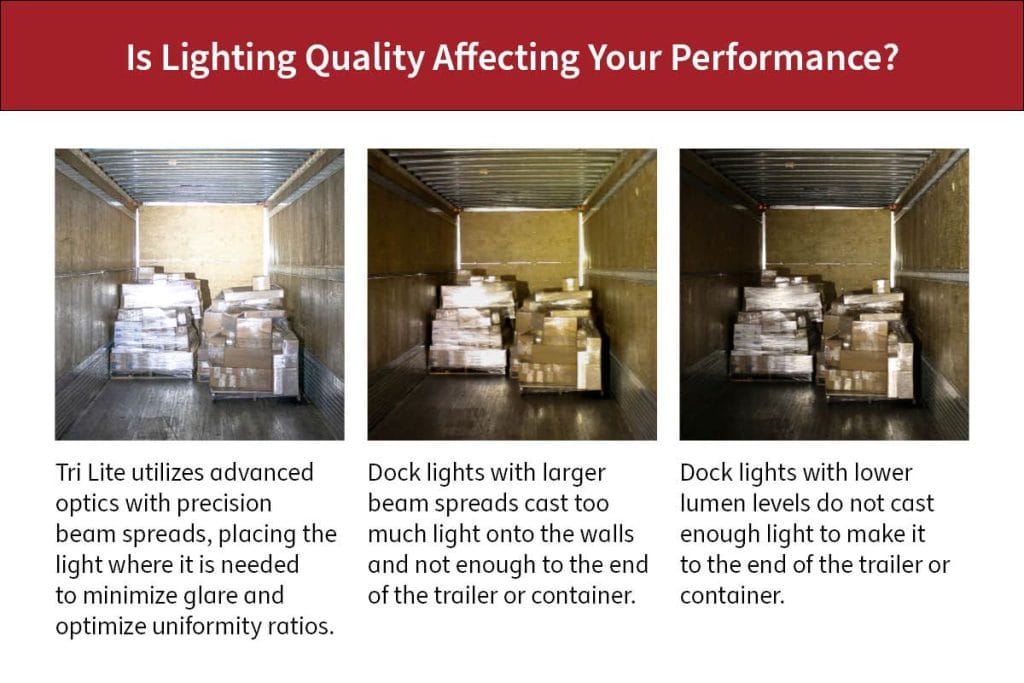
Beam spread and optic design determine whether light reaches the back of a trailer evenly, or creates hot spots near the door and dark zones farther in.
Designing for Uniform Coverage
Lighting systems built specifically for dock and trailer applications use precision optics to control beam spread, placing light where it is needed along the full length of a trailer rather than concentrating it near the door. This reduces glare, maintains a more balanced light distribution end-to-end, and helps keep the Max/Min ratio within recommended limits even in long, narrow, low-reflectance spaces like a 53-foot trailer.
2. CRI (Color Rendering Index): Seeing Color Clearly
Color Rendering Index, or CRI, measures how accurately a light source reveals the true colors of objects compared to natural daylight, on a scale of 0 to 100. In warehouse and dock operations, accurate color visibility is essential for reading labels, distinguishing similar SKUs, and minimizing fulfillment errors.
Most general industrial and warehouse lighting falls in the 70-80 CRI range, which industry guidance considers acceptable for standard visual safety and task performance. Color-critical applications like retail display, food service, or print and design work typically call for 90+ CRI, but for warehouse and dock use, a CRI of 75 or higher is a reasonable commercial benchmark that balances color accuracy against fixture cost.
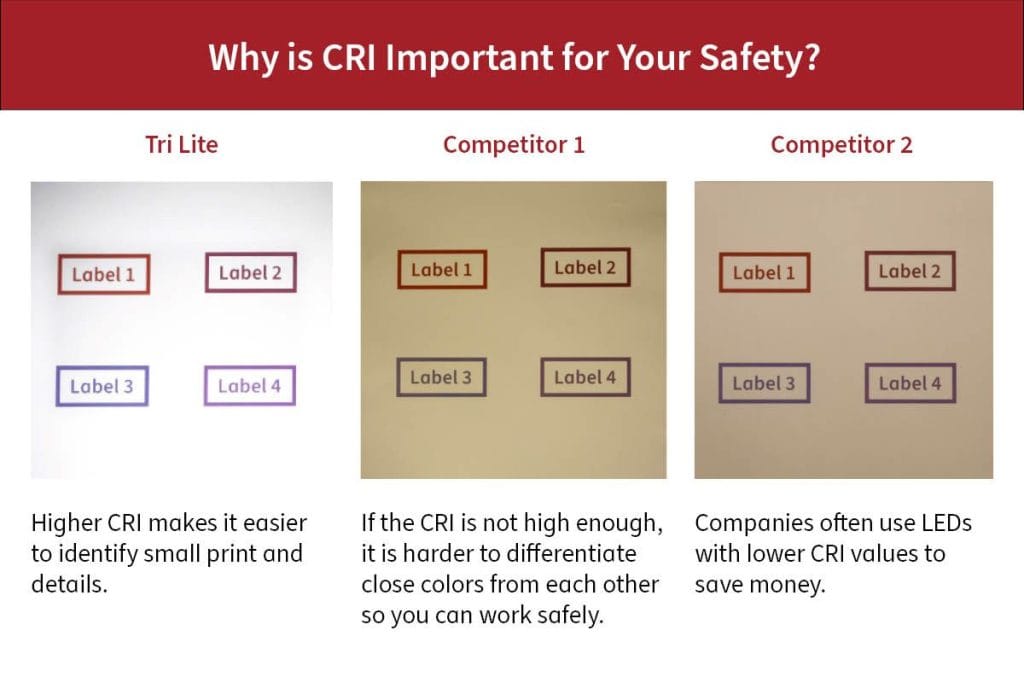
Higher CRI renders label colors closer to their true hue, making it easier to tell similar SKUs or color-coded labels apart at a glance.
Benefits of Higher CRI in Industrial Settings
- Easier label and barcode readability, particularly for color-coded inventory systems
- Faster product identification, which shortens pick times
- Reduced sorting and fulfillment errors caused by misread colors or labels
- Better visibility of safety markings, floor tape, and hazard signage
It’s worth noting that CRI is a single averaged number (technically the average of color samples R1 through R8), which means two fixtures with identical CRI ratings can still render certain colors, especially saturated reds, differently. For most warehouse applications this distinction matters less than for retail or healthcare, but it’s a reason some specifiers also reference the newer TM-30 standard (which reports both fidelity and gamut) for a fuller picture of color performance.
3. Color Temperature: Supporting Productivity and Alertness
Color temperature, measured in Kelvin (K), describes the visual warmth or coolness of a light source. Lower numbers (around 2700K-3000K) read as warm and amber, similar to incandescent bulbs. Higher numbers (5000K and above) read as cool, crisp, and closer to daylight. For warehouses and loading docks, 4000K-5000K is generally considered the optimal range, and it’s the range most commonly specified for high-bay and dock fixtures across the industry.

Lower alertness is linked to more mistakes and a higher injury risk; cooler color temperatures in the 4000K-5000K range support sustained focus during physical, task-intensive work.
Why Color Temperature Affects Performance
Cooler light, generally in the 5000K neighborhood, has been associated with:
- Improved worker focus during repetitive or detail-oriented tasks
- Faster reaction time, which matters around moving equipment
- Better-maintained energy and alertness across a full shift
Warmer light, while often preferred in hospitality or residential settings for its comfort and ambiance, can read as relaxing rather than activating, which may reduce attentiveness in environments where sustained alertness and quick visual decisions are part of the job. Some published research also links color temperatures above roughly 6000K to increased eye strain, which is part of why most industrial guidance settles in the 4000K-5000K band rather than pushing toward the coolest available output.
A useful rule of thumb: pick the color temperature for the task being performed, not just for general brightness. A receiving and inspection area doing detailed label checks benefits from the alertness boost of 5000K; a break room or office attached to the same facility may be better served by a warmer 3500K-4000K for comfort.
4. Color Shift: Ensuring Long-Term Lighting Consistency
Color shift is what happens when an LED fixture’s output drifts away from its originally specified color temperature over time, usually as a result of heat stress on the LED chips and phosphor coating. Over years of operation, lower-quality LED lighting can degrade in ways that are visible to the naked eye, sometimes resulting in uneven tones across a fixture or, in more severe cases, a noticeable purple or magenta hue as the phosphor breaks down.
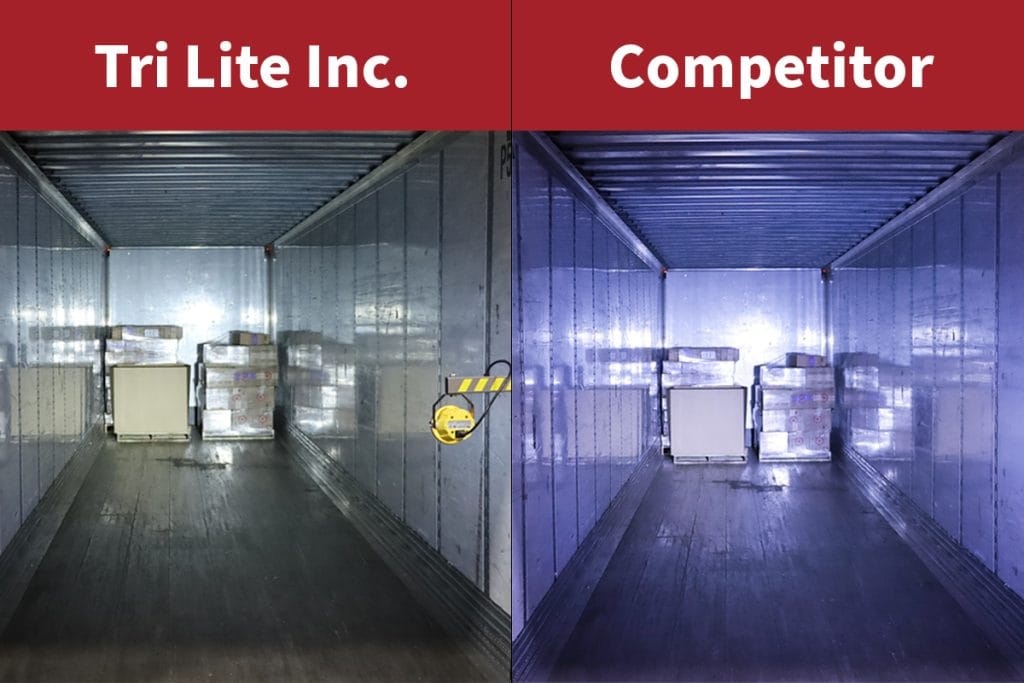
Color shift over a fixture’s lifespan can range from a tight, stable beam to visibly uneven or discolored output, depending on thermal management and LED quality.
Why Color Consistency Matters Operationally
- Reduced visibility and clarity as the spectrum drifts away from its rated output
- Visual discomfort for workers who notice the inconsistency fixture-to-fixture
- Compromised workplace safety if color shift affects how safety colors and signage are perceived
- Higher long-term maintenance and replacement costs as degraded fixtures are swapped out ahead of schedule
Engineering for Stability
Preventing color shift comes down to thermal management, component quality, and precision engineering working together. Key factors include:
- Advanced thermal management to keep LED junction temperatures low and stable
- High-quality, binned LEDs with consistent phosphor coatings
- Precision optics that maintain beam shape and reduce hot-spotting, which itself accelerates localized heat buildup
- Third-party LM-80 and LM-79 testing data from the manufacturer, which documents expected lumen and color maintenance over the rated lifespan
When evaluating fixtures for a warehouse or dock retrofit, asking for LM-80 (LED light source lumen maintenance) and LM-79 (whole-fixture photometric) test data is one of the most reliable ways to compare long-term color stability claims across manufacturers, rather than relying on marketing specs alone.
How Tri Lite Approaches These Four Factors
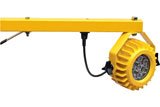
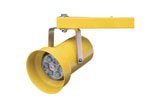
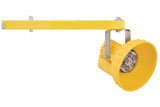
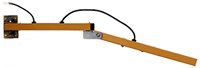
Tri Lite designs its loading dock and warehouse lighting systems around these same four benchmarks. Fixtures use precision optics engineered for even, glare-controlled light distribution across the full length of a trailer, helping installations stay within recommended uniformity ratios. LEDs are sourced and third-party tested for consistent color accuracy, and output is standardized at 5000K to support alertness and visibility in task-intensive dock environments. Thermal management and component selection are built around long-term color stability, so output stays closer to its rated specification over the life of the fixture rather than drifting as it ages.
Frequently Asked Questions
What is the difference between human-centric lighting and regular LED lighting?
Regular LED lighting is typically specified to meet a minimum lumen or footcandle requirement at the lowest cost. Human-centric lighting adds three additional design criteria on top of brightness: uniformity (how evenly light is distributed), color accuracy (CRI), and color temperature appropriate to the task, all chosen to support how people actually see and perform, not just to meet a code minimum.
What footcandle level is required for warehouse lighting?
OSHA 1926.56 sets a regulatory minimum of 3-5 footcandles for general warehouses and material handling areas. However, the Illuminating Engineering Society’s recommended practice for active warehouse tasks generally falls in a higher 10-30 footcandle range, since the OSHA figure is a legal floor rather than an operational target.
What CRI is good enough for warehouse lighting?
A CRI of 75 or higher is generally considered adequate for warehouse and loading dock applications, where the main tasks are reading labels, identifying products, and navigating safely. Color-critical environments like retail display or food service typically require 90+ CRI, but that level of color accuracy is usually unnecessary, and adds cost, in a standard warehouse setting.
What color temperature is best for a loading dock?
Most industry guidance recommends 4000K to 5000K for loading docks and warehouses. This range supports alertness and quick visual decision-making without venturing into the very cool (6000K+) range that some studies associate with increased eye strain.
Why does lighting uniformity matter more in trailers than in open warehouse space?
Trailers and shipping containers are long, narrow, and largely non-reflective except near the open door, which makes it harder for light to travel the full length without losing intensity or uniformity. Workers also move in and out of trailers frequently, sometimes dozens of times per shift, so any unevenness in lighting gets multiplied across many adaptation cycles per worker, per day.
What causes LED lights to change color over time?
Color shift in LED fixtures is generally caused by heat stress on the LED chip and the phosphor coating responsible for converting raw LED light into white light. Lower-quality components, poor thermal management, or both can cause the phosphor to degrade unevenly, which shows up visually as uneven tones or, in advanced cases, a shift toward a purple or magenta hue.
Conclusion: Lighting That Supports Performance
Human-centric lighting is a critical, and often under-specified, component of modern warehouse and loading dock design. By prioritizing light uniformity, color accuracy, optimal color temperature, and long-term color consistency, facilities can reduce errors, lower injury risk, and support stronger performance across every shift. These four factors are measurable, comparable across manufacturers, and worth writing directly into a lighting spec rather than leaving to a generic lumens-per-square-foot calculation.
Tri Lite lighting solutions are engineered around these four benchmarks, helping create safer, more efficient, and more comfortable working environments every day.